Daddy Smile: Your New Favorite Handwritten Font
There’s a particular feeling you get when you find a tool that just works. It’s not flashy, it doesn’t demand attention, but it solves a problem so cleanly that you wonder how you managed before. In the world of design assets, that feeling often comes from discovering the right typeface. Daddy Smile is one of those finds. It’s a simple and friendly handwritten font that doesn’t try to be everything to everyone, but for the right project, it becomes indispensable. Think of it as the reliable, warm, and approachable voice in your creative toolkit—the one that makes your message feel personal and instantly relatable.
The Personality Behind the Pen Strokes
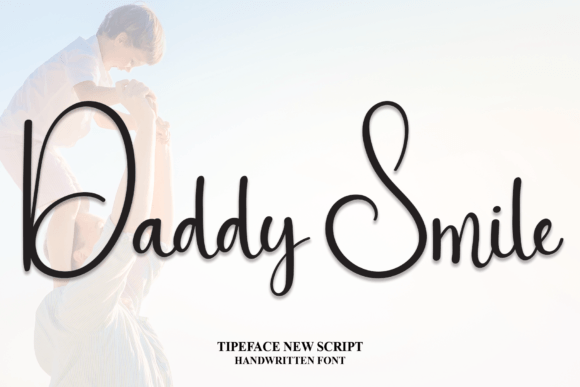
At its core, Daddy Smile is a handwritten font with a distinctly casual and optimistic character. The letterforms mimic natural, flowing handwriting without the erratic messiness that can sometimes make script fonts difficult to use. The strokes have a consistent, gentle weight, offering a sense of stability and trustworthiness. There’s a subtle bounce to the baseline that injects energy and playfulness, but it’s controlled enough to maintain professionalism. This balance is its greatest strength. It’s not a formal serif font for a law firm’s annual report, nor is it a sterile sans serif font for corporate data visualization. Instead, it occupies a sweet spot: friendly, human, and full of charm.
The visual appeal of Daddy Smile lies in its authenticity. It avoids the overly polished, digital perfection that can make some premium fonts feel cold. The slight irregularities in the letter spacing and connection points mimic the look of actual ink on paper, which adds a layer of warmth and tactile quality to any design. This makes it an excellent creative font for projects where you want to evoke emotion, nostalgia, or a handcrafted sensibility. It’s the typographic equivalent of a handwritten note left on the kitchen counter—a gesture that feels personal and thoughtful.
Where Daddy Smile Truly Shines: Practical Applications
The versatility of Daddy Smile is where it moves from being a nice-to-have to a must-have. Its strength lies in applications where communication needs to feel direct, personal, and engaging. Let’s break down some of the most effective uses.
For brand identity and logo design, this handwritten font is a powerful choice for businesses that want to project approachability and authenticity. Think of boutique bakeries, local coffee roasters, independent craft stores, or personal coaching services. A logo set in Daddy Smile immediately tells customers, “We’re human, we care, and we’re here to connect.” It’s particularly effective for brands targeting audiences who value handmade quality, community, and a personal touch over corporate sterility. Pair it with a clean sans serif font for body text to create a balanced and professional font pairing that maintains readability while keeping the brand’s friendly voice front and center.
In packaging design, Daddy Smile can transform a product from a mere commodity into a story. Imagine it on labels for artisanal jams, homemade candles, or organic skincare products. The font’s handwritten style suggests the product inside was made with care, reinforcing the brand’s narrative of quality and craftsmanship. It works beautifully for product names, taglines, or special callouts like “Small Batch” or “Made with Love.”
For editorial design and publishing, this typeface finds its place in magazines, blogs, and books aimed at lifestyle, parenting, DIY, and personal development. It’s perfect for pull quotes, chapter titles, section headers, or author bylines where you want to inject a conversational, authorial voice. In a cookbook, for instance, Daddy Smile could be used for recipe titles or handwritten-style notes in the margins, making the content feel more accessible and less intimidating than a formal display font.
The digital realm is where Daddy Smile truly excels in modern web design and social media graphics. On websites, it’s ideal for hero section headlines, call-to-action buttons, or testimonial quotes where you want to grab attention and foster an emotional connection. Its friendly demeanor can increase click-through rates and time-on-page by making the user experience feel more personal. For social media, it’s a game-changer. Whether you’re creating Instagram stories, Pinterest pins, or Facebook ads, Daddy Smile can make your graphics stand out in a crowded feed. Use it for motivational quotes, event announcements, sale promotions, or to highlight key messages. Its casual style encourages engagement, making followers feel like they’re hearing from a friend rather than a faceless brand.
Beyond commercial projects, it’s a fantastic resource for personal creations. Use it for custom greeting cards, wedding invitations, party banners, scrapbooking, or personalized gifts. Its inherent warmth makes any personal project feel more special and tailored.
Integrating Daddy Smile into Your Workflow: A Practical Guide
Choosing a font is more than just picking something that looks nice on a specimen sheet. It’s about finding a tool that fits your project’s goals, audience, and technical requirements. Here’s how to think about working with Daddy Smile.
First, evaluate the project fit. Ask yourself: Does my project require a tone that is friendly, personal, and informal? Is my audience likely to respond to a human, handcrafted aesthetic? If the answer is yes, then Daddy Smile is a strong contender. It’s less suitable for projects requiring gravitas, high formality, or dense, long-form reading where a traditional serif or sans serif would be more appropriate.
Next, consider font pairing. Daddy Smile works best when it’s not the only voice in the room. For body copy, pair it with a highly legible, neutral sans serif font like Lato, Open Sans, or Montserrat. This contrast creates a clear visual hierarchy, with Daddy Smile drawing the eye to key elements and the supporting font ensuring comfortable reading for longer text blocks. Avoid pairing it with another ornate or script font, as this can create visual clutter and reduce overall readability.
Always review the included styles and character set. A quality commercial font like Daddy Smile often comes with multiple weights (e.g., Regular, Bold) or stylistic alternates—different versions of certain letters that can add variety to your text. Check for extended language support if you’re working on international projects. Understanding the full extent of the design assets you’ve purchased allows you to use them to their full potential.
Readability is paramount, even with a display font. While Daddy Smile is designed for headlines and short text, you must test it at the intended size and on the intended medium. Does it remain legible at small sizes on a mobile screen? Is the contrast sufficient when placed over a busy background image? Always conduct a quick readability test. A font that looks perfect at 100px on your monitor might become an illegible squiggle at 30px on a smartphone.
Finally, respect the licensing. Daddy Smile is a premium font, and its license dictates how you can use it. Ensure your license covers your intended use—whether for a single client project, unlimited commercial work, or personal use only. Proper licensing protects you legally and supports the type designers who create these valuable tools for the creative community.
In the end, Daddy Smile is more than just a handwritten font. It’s a strategic tool for connection. In a digital landscape often dominated by impersonal interfaces and automated messages, it offers a way to inject humanity, warmth, and genuine personality into your work. Whether you’re a designer crafting a brand identity, a marketer creating social media graphics, or a small business owner designing your own packaging, it provides a reliable way to make your communication feel less like a broadcast and more like a conversation. That’s a powerful asset to have in your creative arsenal.