Balleroga: Whimsical Handwritten Font for Modern Brands
There’s a particular quality in some handwritten fonts that feels both personal and polished—a balance that’s surprisingly hard to achieve. Balleroga is a premium font that walks this line beautifully. Its flowing, slightly irregular letterforms carry the warmth of human touch, yet the overall design is cohesive enough to function reliably across professional projects. For designers and business owners, this kind of creative font offers a practical solution: it adds personality without sacrificing clarity.
Visual Character and Personality
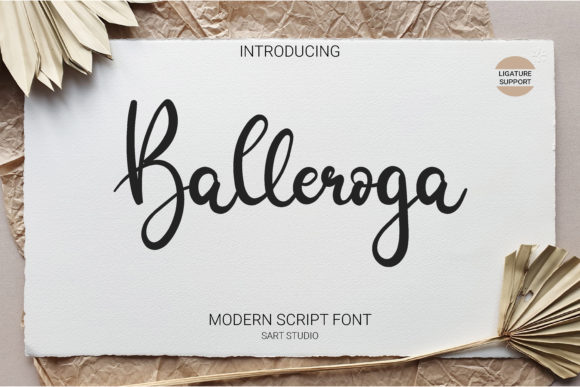
Balleroga is a script font with a distinct whimsical style. The letterforms feature gentle curves, varied stroke weights, and a natural baseline that mimics the rhythm of hand-lettering. Unlike rigid geometric typefaces, it has an organic quality—some letters might connect seamlessly, while others stand with a slight pause, giving it a relaxed, approachable feel. The overall effect is friendly, artistic, and slightly playful, making it an excellent display font for projects that need to feel human and engaging.
What makes Balleroga particularly useful is its versatility within the handwritten category. It avoids the extremes of being too casual (like a rough sketch font) or too formal (like a traditional cursive script). This middle ground allows it to work in contexts where you want to convey creativity, warmth, or authenticity without appearing overly informal. The font’s personality supports branding that values approachability and artistry—think boutique brands, lifestyle products, or personal projects with a crafted touch.
Where Balleroga Shines: Practical Applications
Choosing the right typeface for a project often comes down to context and audience. Balleroga excels in situations where you need to make an emotional connection or highlight creativity. Here’s where it works particularly well:
- Branding and Logo Design: For small businesses, startups, or personal brands, Balleroga can serve as the primary logo font or a complementary element. It works well for bakeries, cafes, boutique shops, wellness brands, or any venture wanting to appear artisanal and customer-focused. Its handwritten style helps build brand recognition through a distinctive, memorable mark.
- Marketing and Social Media: In digital spaces, this font grabs attention without feeling aggressive. Use it for Instagram quotes, Facebook ad headlines, Pinterest graphics, or email newsletter headers. Its readability at larger sizes makes it ideal for short, impactful messages where you want to evoke a specific mood.
- Packaging and Product Design: On physical products, Balleroga adds a tactile, human element. Consider it for labels on handmade goods, packaging for specialty foods, or designs for craft supplies. The font’s style suggests care and craftsmanship, which can influence purchasing decisions.
- Publishing and Editorial Design: While not suited for long body text, Balleroga can enhance book covers, chapter headings, magazine pull quotes, or blog post titles. It introduces visual interest and breaks the monotony of standard serif or sans serif fonts used in editorial design.
- Personal and Craft Projects: For wedding invitations, greeting cards, scrapbooking, or DIY crafts, this creative font provides a professional touch that’s hard to replicate with free alternatives. It’s a valuable design asset for hobbyists who want polished results.
A key consideration is contrast. Balleroga’s whimsical nature pairs best with cleaner, more neutral typefaces. Try combining it with a simple sans serif font for body text or a classic serif font for supporting headings. This creates visual hierarchy and ensures your message remains clear. Testing font pairings is essential—what looks good in a design file might need adjustment in context.
Strategic Use and Practical Considerations
Using a handwritten font like Balleroga effectively requires thoughtful implementation. First, evaluate the project’s tone and audience. A law firm’s website might not be the right fit, but a yoga studio’s brand identity could be perfect. Consider how the font’s personality aligns with your brand values and the message you want to communicate.
Readability is another practical factor. While Balleroga is designed to be legible, handwritten fonts generally perform best at larger sizes—think headlines, logos, or short phrases rather than paragraphs of text. Always test the font in its intended application: view it on different screens, print it out, and check how it looks at various scales. The goal is to maintain clarity while leveraging its stylistic strengths.
When working with a premium font like Balleroga, review the included styles and character sets. Many quality fonts offer alternates, ligatures, or additional weights that can expand your design options. Check the licensing as well—ensure it covers your intended use, whether for personal projects, commercial client work, or merchandise. Understanding these details prevents issues later and helps you make the most of the typeface.
From a brand strategy perspective, consistency is key. If you choose Balleroga for your logo, consider how it will extend across other touchpoints—website headings, social media graphics, printed materials. The font should feel cohesive with your overall visual identity, including colors, imagery, and other typography. A well-chosen font becomes part of your brand’s voice, helping to build recognition and trust over time.
Ultimately, Balleroga is a tool for adding human connection to design. Its strength lies in its ability to convey authenticity and creativity in a polished, usable format. For designers, marketers, and entrepreneurs, it offers a way to stand out in a crowded visual landscape—by embracing a style that feels personal, artistic, and intentionally crafted. In a world of uniform digital text, that kind of thoughtful typography can make all the difference.