Diary Adora: Adding Handwritten Charm to Your Projects
There's a certain magic in a handwritten note. It feels personal, immediate, and full of character. In a world saturated with crisp, digital typefaces, that human touch can be a powerful differentiator. This is the exact space Diary Adora occupies. It’s a premium handwritten font designed to inject warmth and authenticity into your work. Think of it not just as letters on a screen, but as a direct line to a softer, more personal aesthetic. Its flowing, connected strokes and gentle imperfections mimic the natural rhythm of a pen on paper, making it a versatile asset for anyone looking to create an emotional connection through design.
The Visual Personality of a Creative Font
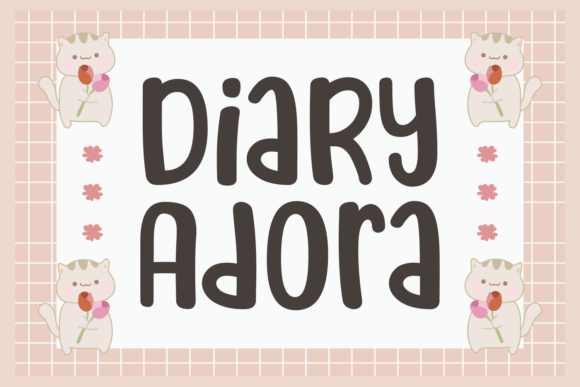
At its core, Diary Adora is a script font that leans into its charming, whimsical side. The letterforms are designed with a casual elegance—each character flows into the next with a natural, slightly bouncy baseline. This isn't a rigid, formal calligraphy; it's the kind of writing you'd find in a beloved journal or on a heartfelt greeting card. The weight is balanced, providing enough presence to be legible without feeling heavy. The overall effect is one of sweet sophistication, making it a standout choice among modern typography options that often prioritize stark minimalism.
What makes it particularly useful is its versatility within that handwritten style. It carries the personality of a display font, perfect for catching the eye in headlines and logos, yet it retains enough clarity for shorter blocks of text in specific contexts. This duality allows it to serve as a central element in a brand identity, especially for businesses that want to project approachability, creativity, and care. It’s the kind of typeface that tells a story before the reader even processes the words.
Practical Applications Across Design and Business
Where does a font like Diary Adora truly shine? Its applications are surprisingly broad, extending far beyond personal crafting projects. For entrepreneurs and small business owners, it’s a tool for building a distinct and memorable brand. Imagine it on product packaging for artisanal goods, on the labels of boutique cosmetics, or as the primary font for a wedding planner’s stationery suite. It instantly communicates a level of personal investment and care that generic fonts cannot.
Designers and content creators will find it invaluable for social media graphics and digital content. A quote overlay on an Instagram post, a title card for a YouTube video, or a header for a lifestyle blog gains an immediate emotional pull when set in Diary Adora. In editorial design, it can be used for pull quotes or section headers to break the monotony of body text and guide the reader's eye with a friendly nudge. For publishers, it offers a way to add personality to book covers, chapter headings, or promotional materials for genres like romance, cozy mystery, or children’s literature.
The physical world is where it becomes a true design asset. Consider its use in logo design for cafés, bakeries, or creative studios. Its handwritten nature works beautifully for packaging design, especially on products where a homemade or artisanal quality is a key selling point. For crafters and hobbyists, it’s perfect for creating custom apparel, mugs, notebooks, and framed art prints. The font translates beautifully to vinyl cutters and screen printing, maintaining its charm at various scales.
Making Diary Adora Work for You: A Practical Guide
Integrating a new creative font into your workflow requires a bit of strategy. First, consider the project’s tone. Diary Adora excels in contexts that are positive, personal, and celebratory. It might not be the right fit for a corporate financial report, but it’s perfect for a non-profit’s thank-you campaign or a children’s educational brand. Always test it at the size you intend to use. While it’s legible for headlines and short phrases, very small sizes in dense paragraphs could challenge readability. This is where font pairing becomes critical.
A strong pairing grounds the whimsy of Diary Adora. For web design or printed materials, combine it with a clean, neutral sans serif font for body copy. The contrast creates a clear visual hierarchy, letting the handwritten font command attention in headlines while the sans serif ensures easy reading for longer text. Alternatively, pairing it with a simple, classic serif font can create a more sophisticated, editorial feel. The key is balance—let Diary Adora be the star of the show in measured doses.
Before committing, explore the full character set. A quality premium font like this often includes stylistic alternates, ligatures, and extended language support. These features are not just decorative; they allow you to customize the look, avoid repetitive letter shapes, and solve specific design problems. Finally, always verify the commercial font licensing. Ensure the license covers your intended use, whether it’s for client work, merchandise for sale, or digital products. Understanding these details upfront prevents headaches later and ensures you’re using the asset professionally.
In the end, choosing a typeface is about finding a voice. Diary Adora offers a voice that is warm, inviting, and unmistakably human. By applying it thoughtfully—considering context, pairing, and practicality—you can leverage its charm to create designs that don’t just look good, but feel genuinely connected to your audience. It’s a small change in your design assets that can make a significant difference in how your work is perceived and remembered.