Dragonfly: A Handwritten Font for Distinctive Design Projects
There’s something magnetic about a font that feels personal. In a world saturated with clean geometric sans serifs and formal serif typefaces, a handwritten font like Dragonfly cuts through the noise. It’s not trying to be everything to everyone. Instead, it offers a distinct personality—cool, unique, and carefully crafted for designers and creators who want their work to feel authentic.
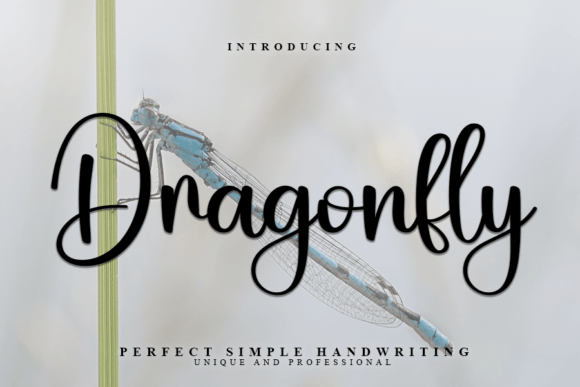
Dragonfly is a premium font that walks the line between artistic expression and practical application. Its letterforms carry the natural rhythm of hand-lettering without sacrificing legibility. Each character flows into the next with subtle connections, giving text a cohesive, organic appearance. The strokes vary in weight, mimicking the pressure changes of a pen on paper, which adds depth and visual interest that flat, uniform fonts simply can’t replicate.
Visual Character and Design Personality
What sets Dragonfly apart from other script fonts is its balance. Some handwritten typefaces lean heavily into casual, almost chaotic energy. Others become so refined they lose the warmth that makes handwriting appealing in the first place. Dragonfly sits comfortably in a middle ground—it’s polished enough for professional use but retains the human touch that makes it feel approachable.
The font features slightly elongated ascenders and descenders, which give it an elegant, airy quality. The letter spacing is generous enough to maintain readability at smaller sizes, while the overall texture creates a sense of movement across a line of text. It’s the kind of typeface that invites you to lean in, not pull away.
From a stylistic perspective, Dragonfly reads as modern typography with a handcrafted sensibility. It doesn’t rely on excessive swashes or ornamental flourishes to make its point. Instead, its strength lies in the consistency of its character and the natural flow of its connections. This restraint is what makes it versatile across so many different applications.
Where Dragonfly Shines: Real-World Applications
Choosing the right font for a project often comes down to context. A typeface that works beautifully on a wedding invitation might fall flat on a product label. Dragonfly’s design makes it adaptable across a surprisingly wide range of uses, which is part of its appeal for creative professionals juggling multiple types of work.
Branding and Logo Design
For brands that want to convey warmth, creativity, and individuality, Dragonfly offers a strong foundation. It works particularly well for businesses in lifestyle, wellness, artisan food, boutique retail, and creative services. A bakery logo, a handmade candle brand, or a personal coaching practice—all of these benefit from a typeface that feels human rather than corporate. When used as a primary display font in logo design, Dragonfly can establish an immediate emotional connection with an audience.
Packaging Design
Product packaging needs to communicate quickly and memorably. Dragonfly excels here because its handwritten style signals authenticity and craftsmanship. On food products, cosmetics, or specialty goods, it suggests that care and attention went into the creation of what’s inside. Pair it with a clean sans serif font for ingredient lists and regulatory text, and you have a packaging system that’s both beautiful and functional.
Editorial and Publishing
Magazine headers, blog post titles, cookbook chapter headings, and pull quotes all benefit from a font with personality. Dragonfly brings visual hierarchy to editorial design without overwhelming the body text. It draws the eye naturally, making it an effective tool for publishers and content creators who want to guide readers through a page or screen.
Digital and Social Media
On platforms where attention spans are short, distinctive typography matters. Dragonfly works well for social media graphics, Instagram stories, Pinterest pins, and website hero sections. Its handwritten quality feels native to the informal, visual-first nature of these platforms. For bloggers and marketers creating branded content regularly, having a go-to creative font like Dragonfly in their design assets toolkit saves time while maintaining a consistent visual voice.
Invitations, Stationery, and Personal Projects
Wedding invitations, greeting cards, event programs, and personal letterheads are natural homes for a handwritten font. Dragonfly’s elegant but approachable style makes it suitable for both formal and semi-formal occasions. Crafters and hobbyists working on DIY projects will find it equally useful for scrapbooking, custom prints, and handmade gifts.
How Font Choice Shapes Perception and Engagement
Typography isn’t just decoration—it’s communication. The font you choose for a project influences how people perceive the content before they read a single word. Dragonfly, as a handwritten font, carries specific associations: creativity, warmth, personal attention, and authenticity. These associations aren’t arbitrary; they’re rooted in how people respond to visual cues that resemble human handwriting.
When a brand consistently uses a typeface like Dragonfly across its touchpoints—website, packaging, social media, printed materials—it builds recognition. Over time, audiences begin to associate that visual style with the brand itself. This is the foundation of strong brand identity, and it doesn’t require a massive budget. It requires thoughtful, consistent choices.
Readability is always a consideration with script fonts. Dragonfly handles this well because its letterforms are clear and its connections are predictable. That said, it’s best suited for display use—headlines, titles, short phrases, and callouts—rather than long-form body text. Using it strategically, rather than universally, preserves its impact and keeps your design readable.
Practical Guidance for Working with Dragonfly
If you’re considering Dragonfly for a project, start by evaluating the tone you want to set. This typeface works best when the goal is to feel personal, creative, or artisanal. It’s less suited for projects that demand a strictly corporate, technical, or institutional voice.
Font Pairing
Pairing Dragonfly with a complementary typeface creates balance and visual hierarchy. A simple sans serif font like a geometric or humanist sans works well for body copy and supporting text. A traditional serif font can also pair nicely if the project calls for a more layered, editorial feel. The key is contrast—you want the handwritten font to stand out as the accent, not compete with the supporting typeface.
Testing and Evaluation
Before committing to any font, test it in context. Set your actual headlines, not just sample text. Check how it looks at different sizes, on different backgrounds, and in both digital and print environments. Pay attention to how specific letter combinations look in Dragonfly—certain pairings may need manual kerning adjustments for optimal spacing.
Licensing and Commercial Use
Always review the licensing terms before using a font commercially. Dragonfly, as a premium font, typically includes a license that covers both personal and commercial projects, but the specifics depend on where you purchase it. If you’re using it for client work, make sure the license covers that use case. Respecting font licensing isn’t just legal compliance—it supports the designers who create the tools we rely on.
Styles and Variations
Check whether Dragonfly includes multiple weights or stylistic alternates. Some premium handwritten fonts come with additional glyphs, ligatures, or swash variations that expand your design options. These extras can be valuable for logo design and display work where you want a slightly different character without switching typefaces entirely.
Making the Most of a Creative Font Choice
A font like Dragonfly isn’t just a design asset—it’s a creative decision that shapes how your audience experiences your work. Used thoughtfully, it adds personality, builds brand recognition, and creates an emotional connection that more neutral typefaces can’t achieve. The trick is knowing when and where to deploy it, and pairing it with complementary design choices that support rather than dilute its character.
Whether you’re a designer building a brand identity, a small business owner creating packaging, a publisher designing editorial layouts, or a crafter working on personal projects, Dragonfly offers a distinctive voice. It’s a reminder that typography, at its best, is an extension of human expression—and that the right font can make all the difference.