Fanthemy: The Handwritten Charm That Elevates Modern Design
There's a particular kind of design project where you need something more than clean lines and geometric precision. You need warmth. You need personality. You need that unmistakable human quality that makes someone pause and actually feel something when they look at your work. That's precisely where Fanthemy enters the conversation—a premium font that strikes a rare balance between handwritten authenticity and polished elegance.
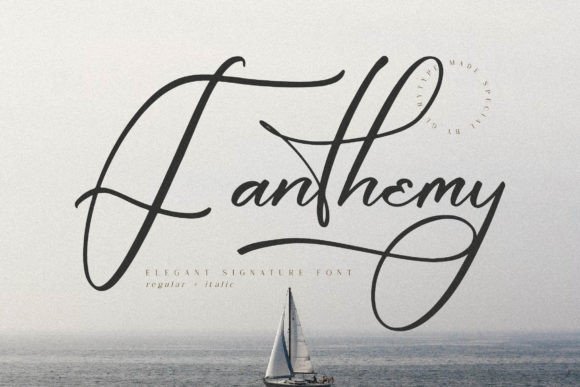
Fanthemy isn't trying to replicate messy scrawl or casual penmanship. Instead, it captures the best version of natural handwriting: the kind you'd see on a beautifully addressed envelope, a carefully lettered quote, or the signature on a high-end brand's thank-you note. Each letterform carries intentional flow and subtle variation, giving text set in Fanthemy an organic rhythm that feels genuinely personal without sacrificing legibility.
Understanding Fanthemy's Visual Character
What makes Fanthemy feel equally charming and elegant comes down to its design DNA. The strokes have a natural weight variation—thicker on downstrokes, thinner where the pen would naturally lift—that mimics real ink on paper. But unlike many script fonts that lean too far into casual territory, Fanthemy maintains consistent baseline alignment and thoughtful letter spacing. The result is a handwritten font that reads as intentional rather than improvised.
The letterforms themselves feature gentle curves and graceful connectors. Capital letters tend to be slightly more ornate, with flourishes that feel decorative without becoming distracting. Lowercase characters flow together with natural ligatures, creating a cohesive word picture that's easy on the eyes. This balance makes Fanthemy versatile enough for both display purposes and shorter body text applications where personality matters more than dense readability.
There's also a warmth to Fanthemy's proportions. The x-height sits comfortably in a middle ground—not too tall, not too compressed—giving words a friendly, approachable presence. Ascenders and descenders have enough room to breathe without creating awkward spacing issues. These subtle proportional choices are what separate a well-crafted typeface from something that merely mimics handwriting.
Where Fanthemy Truly Shines
Wedding invitations are an obvious starting point, and for good reason. Fanthemy brings that bespoke, hand-lettered quality couples want without the cost of custom calligraphy. It works beautifully for names, dates, and key phrases on invitation suites, RSVP cards, and envelope addressing. Pair it with a clean serif font or a simple sans serif font for the details text, and you've got a typographic system that feels cohesive and refined.
Thank-you cards and greeting cards benefit enormously from this kind of creative font. When you're trying to convey genuine gratitude or heartfelt wishes, a handwritten typeface does heavy emotional lifting. Fanthemy's elegance keeps it from feeling too casual, which matters when you're a small business sending post-purchase thank-you notes or a brand creating seasonal greeting cards for clients and partners.
For entrepreneurs and small business owners building a brand identity, Fanthemy offers interesting possibilities. It works particularly well for businesses in lifestyle, wellness, beauty, artisan goods, food, and hospitality—industries where authenticity and personal touch are valued. Used as a display font in logos, it can help a brand feel approachable and human. However, it's worth considering the full scope of your applications before committing a handwritten font to your primary logo. Fanthemy excels as a secondary typeface in brand systems, handling taglines, quotes, accent text, and social media graphics while a more structured typeface handles the heavy lifting.
Publishers and content creators will find practical uses across editorial design and digital projects. Pull quotes, chapter headings, blog post titles, podcast cover art, and newsletter headers all benefit from Fanthemy's personality. In packaging design, it can communicate artisanal quality on product labels, box inserts, and care instruction cards. The font adds a human element that counters the increasingly automated feel of modern commerce.
Practical Considerations for Working with Fanthemy
Before incorporating any premium font into your workflow, it's worth thinking through a few practical questions. First, consider your project's context. Fanthemy is a display-oriented handwritten font, which means it's designed to be noticed. That's perfect for headlines, logos, and accent text, but it's not the right choice for long paragraphs or detailed instructions where readability at small sizes is critical. Knowing where a font's strengths lie—and where they don't—is fundamental to good design work.
Font pairing is where many projects succeed or stumble. Fanthemy pairs well with neutral, well-structured typefaces that provide visual contrast without competing for attention. A geometric sans serif font like Montserrat or a classic serif font like Lora can anchor a layout while Fanthemy handles the expressive, emotional moments. Test a few combinations with your actual content before finalizing anything. What looks great in a font specimen doesn't always translate perfectly to real-world copy.
Check what styles and weights are included with your license. Some versions of handwritten fonts include alternate characters, stylistic sets, or swash variations that can add extra flair to specific applications. Understanding what's available helps you get full value from your design assets and prevents you from overlooking features that could improve your work.
Readability deserves honest evaluation. Set Fanthemy at the sizes you'll actually use and view it on different screens and in print if possible. Handwritten fonts can vary significantly in legibility depending on the medium, background color, and surrounding design elements. A font that looks gorgeous on a white background might struggle on a busy photograph or a textured surface. Test it in realistic conditions.
Finally, make sure you understand the commercial licensing terms. If you're using Fanthemy for client work, merchandise, digital products, or anything beyond personal projects, you need a license that covers commercial use. This isn't just about legal compliance—it's professional practice. Using properly licensed fonts protects you, your clients, and the type designers who created the work.
Building with Intention
Good typography isn't about following trends or picking the most popular font of the moment. It's about choosing typefaces that serve your specific communication goals. Fanthemy fills a particular niche in the modern typography landscape: it delivers genuine handwritten character with enough structure and refinement to work in professional contexts. For designers, marketers, bloggers, crafters, and business owners who need that personal touch without compromising on quality, it's a typeface worth having in your toolkit.
The real test of any font is whether it makes your work better—whether it helps your audience connect with your message, whether it supports your brand's story, whether it earns its place among your design assets. Fanthemy, with its blend of charm and elegance, has the qualities to do exactly that. Use it thoughtfully, pair it wisely, and let it bring that irreplaceable human warmth to your next project.