Goldie Angle: The Handwritten Font for Timeless Design
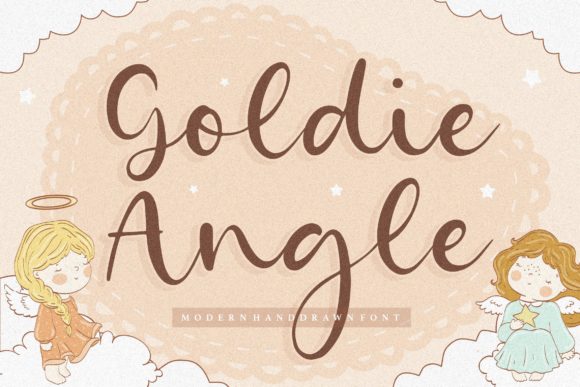
There’s a particular kind of design challenge that requires more than just clean lines and perfect geometry. Sometimes, a project needs a human pulse. It needs to feel personal, crafted, and genuinely warm. This is the space where a well-crafted handwritten font becomes indispensable. Among the many options available, Goldie Angle stands out not for being the loudest, but for being the most refined. It’s a typeface that doesn’t just mimic handwriting; it captures the feeling of a considered, elegant pen stroke.
What immediately sets Goldie Angle apart is its delicate balance. Many script fonts lean too heavily into casual, messy scrawls or overly formal, rigid calligraphy. Goldie Angle finds a beautiful middle ground. Its characters have a natural, flowing rhythm, with gentle variations in weight that mimic the pressure of a real pen. The connections between letters feel organic, avoiding the repetitive, mechanical loops that plague lesser fonts. This creates a text that feels authentically handwritten, yet remains remarkably legible. It’s this combination of distinct personality and practical clarity that makes it such a versatile tool for designers and creators.
Where Goldie Angle Truly Shines
The true test of a premium font is its application across diverse projects. Goldie Angle excels in contexts where a personal, human touch is paramount. Think of the tangible, emotional moments: wedding invitations, save-the-dates, and thank you cards. Here, the font’s timeless quality adds a layer of sincerity and romance that a standard serif or sans serif simply cannot match. It feels less like a printed piece and more like a heartfelt note from a friend.
Beyond personal stationery, its strengths translate powerfully into brand identity and logo design. For businesses in the artisanal, boutique, or lifestyle spaces—a local bakery, a handmade jewelry shop, a independent florist—Goldie Angle can form the cornerstone of a brand’s visual voice. Paired with a clean sans serif font for body text, it creates a hierarchy that is both professional and approachable. The logo feels crafted, not corporate. This same principle applies to packaging design, where a handwritten element can make a product feel special and considered before it’s even opened.
In the digital realm, its utility is just as potent. As a display font for website headers, blog post titles, or social media graphics, it immediately draws the eye and sets a specific tone. It’s perfect for quotes, promotional banners, or call-to-action buttons where you want to evoke emotion rather than just convey information. For editorial design, it can be used sparingly for pull quotes or section titles in magazines and e-books, adding a touch of elegance and breaking up blocks of text. The key is using it strategically, as a highlight rather than the workhorse for long paragraphs.
Practical Guidance for Using a Handwritten Typeface
Choosing a font like Goldie Angle is a decision that should be guided by project goals, not just personal taste. Start by evaluating the project’s core message. Is it about warmth, craftsmanship, celebration, or intimacy? If so, this script font is likely a strong candidate. If the message is about cutting-edge technology, data precision, or stark minimalism, a different typeface would be more appropriate.
Next, consider readability. While Goldie Angle is crafted for clarity, all handwritten fonts have a threshold. It’s perfect for headlines, short phrases, and logos. Avoid setting entire paragraphs of body copy in it, as the eye needs consistent, familiar letterforms for sustained reading. This is where font pairing becomes critical. A classic strategy is to pair it with a neutral, geometric sans serif like Montserrat or Lato for body text. The contrast creates visual interest and ensures the hierarchy is clear and functional.
Before committing to a commercial license, test the font rigorously. Examine the full character set. Does it include the punctuation and numerals you need? How does it handle all-caps? Some handwritten fonts look awkward in full uppercase, so check for a dedicated all-caps style if your project requires it. Print a sample at the intended size. How does it look on screen versus on paper? Finally, review the licensing. Ensure the commercial font license covers your specific use case, whether it’s for a client project, merchandise, or digital products. A reputable foundry will make this information clear and accessible.
A Final Thought on Creative Fonts
In a landscape saturated with digital noise, a font like Goldie Angle offers a return to the personal. It’s a design asset that doesn’t just display words; it conveys feeling. Its strength lies in its subtlety and its timeless appeal, making it a valuable addition to any designer’s toolkit. Whether you’re crafting a brand story, designing a heartfelt invitation, or creating social media content that needs to connect on a human level, this typeface provides the means to do so with grace and authenticity. It’s a reminder that the best design often feels less designed and more… felt.