Sevilla: A Signature Font That Feels Like You
There’s a particular challenge in digital design that often goes unspoken: how do you make something feel genuinely personal in a medium that’s inherently impersonal? We work with pixels, grids, and standardized typefaces that, for all their utility, can strip the warmth and humanity out of a message. This is where a font like Sevilla enters the conversation. It’s not just another script font; it’s a bridge between the polished world of digital design and the intimate, imperfect charm of a handwritten note. For designers, entrepreneurs, and creators, finding a typeface that carries this kind of authentic voice can be a game-changer for connecting with an audience.
The Anatomy of a Modern Signature
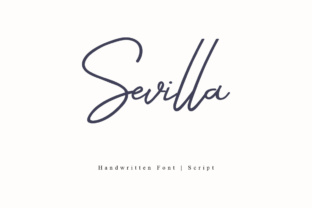
Sevilla presents itself as a clean, signature-style handwritten font. But what does that mean in practice? Visually, it strikes a deliberate balance. It avoids the chaotic, scratchy feel of a hastily scrawled note, yet it doesn’t veer into the territory of overly formal or decorative calligraphy. The letterforms are elegant and modern, with a fluid, confident flow that suggests a practiced hand. The connections between letters are thoughtful, maintaining legibility while preserving the cursive, connected aesthetic. This is key: Sevilla is a display font designed for clarity as much as for character. Its personality is fashionable and approachable, making it versatile enough to feel at home on a high-end product label and a heartfelt wedding invitation alike. It’s a typeface that doesn’t shout; it speaks with a confident, personal tone.
This inherent balance makes Sevilla a powerful tool in the modern typographic landscape. In an era saturated with both sterile sans serif fonts and overly ornate scripts, it carves out a niche as a premium font that feels both contemporary and timeless. It doesn’t rely on gimmicks. Its appeal lies in its authenticity and its ability to inject a dose of human touch into any project. For a brand, using such a creative font can signal that there are real people behind the logo—people who value craftsmanship and connection.
Where Sevilla Finds Its Voice: Practical Applications
The true test of any design asset is its application. Where does a font like Sevilla genuinely shine, and where might it struggle? Its strength lies in contexts where personality, elegance, and a human connection are paramount. Think of it as the typographic equivalent of a firm, friendly handshake.
- Brand Identity & Logo Design: For businesses in the lifestyle, beauty, artisanal food, or boutique service sectors, Sevilla can form the core of a memorable brand identity. Imagine it as the primary logotype for a bespoke jewelry maker, a specialty coffee roaster, or a personal stylist. It immediately communicates a sense of care, quality, and personal service that a generic sans serif cannot.
- Marketing & Social Media: In the fast-scrolling world of social media, a post needs to stop the thumb. Sevilla, used for headlines or quotes in social media graphics, adds a layer of sophistication and personal appeal. It’s perfect for Instagram stories, Pinterest pins, or Facebook ads for coaches, authors, or lifestyle brands. It makes a message feel less like an advertisement and more like a recommendation from a trusted friend.
- Publishing & Editorial Design: While not suited for body text, Sevilla excels in editorial design for pull quotes, chapter titles, or author names on a book cover. In a magazine layout, it can highlight a feature story or a personal essay, drawing the reader’s eye with its elegant form.
- Packaging & Product Design: On a product label, whether for a small-batch candle, artisan chocolate, or a specialty sauce, Sevilla conveys an artisanal, handcrafted quality. It tells a story of origin and care, which can significantly influence a customer’s perception and willingness to pay a premium.
- Web Design & Digital Experience: Used judiciously in web design, Sevilla can add personality to a website’s header, a call-to-action button, or a testimonial section. It breaks the monotony of standard web fonts and helps a site feel more unique and engaging, improving overall audience engagement.
It’s equally important to understand its limitations. As a handwritten font, using Sevilla for long paragraphs of text would be a readability disaster. Its role is as a highlighter, an accent, a voice for key phrases—not the narrator of an entire story. Pairing it with a clean, neutral sans serif font or a classic serif font for body copy is not just a suggestion; it’s a necessity for creating a functional and visually balanced layout.
Working With Sevilla: A Designer’s Practical Guide
Choosing a font is a strategic decision, not just an aesthetic one. If you’re considering integrating Sevilla into your toolkit, here’s how to approach it thoughtfully.
Evaluate the Project Fit: Before you even download, ask: Does this project call for a personal, elegant touch? Is the audience one that values authenticity and craftsmanship? A law firm’s annual report is not the place for Sevilla. A wedding planner’s website, however, is a perfect match. The font’s personality must align with the project’s goals and audience expectations.
Test Font Pairings Rigorously: This is where the real work happens. Sevilla will almost always need a partner font. Create a simple test document. Set a headline in Sevilla and try setting a paragraph underneath in various options. A geometric sans serif like Poppins or Montserrat can create a clean, modern contrast. A transitional serif like Georgia or a slab serif like Rockwell can offer a more traditional, grounded pairing. The goal is contrast in style but harmony in tone. The pairing should feel intentional, not accidental.
Review the Included Styles and Glyphs: A quality commercial font often comes with more than just the basic alphabet. Check if Sevilla includes alternates, ligatures, or swashes. These extras can be invaluable for customizing a logotype or a headline, allowing you to avoid a generic look. For instance, a stylistic alternate for the capital ‘S’ or ‘M’ might be the perfect solution for a client’s name.
Consider Readability in Context: Always test the font at the size and in the medium where it will be used. A word that looks beautiful in a design mockup on your 27-inch monitor might become an illegible squiggle when shrunk down for a mobile website header or printed on a small product tag. Zoom out, print a sample, view it on a phone—ensure its elegant curves don’t compromise its core function: being read.
Understand the Licensing: For any professional use, especially for a premium font like Sevilla, review the license carefully. Does it cover the number of users, websites, or app installations you need? Commercial projects require a commercial license. Using a font outside its license is a risk that can lead to legal and financial headaches down the line. Treat it as you would any other professional service or asset you invest in.
Ultimately, a typeface like Sevilla is more than just a collection of glyphs. It’s a design tool for building connection. It allows a brand to have a signature, a blog to have a voice, and a product to tell a story. Used with intention and skill, it can transform a standard design into something that feels genuinely crafted and personal, helping you stand out in a crowded digital world. The key is to use it not as a crutch, but as a deliberate choice to add a layer of human elegance to your work.