Caligrhypt: A Handwritten Font with Modern Edge
There's a particular challenge in design when you need something that feels personal and human, but doesn't look like it was scribbled in a hurry. You want warmth, you want character, but you also need clarity and a contemporary sensibility. That's the sweet spot where Caligrhypt lives. This isn't your typical, overly formal script font. It's a handwritten font that carries a distinct personality—quirky, fresh, and surprisingly versatile. It's the kind of typeface that can make a project feel approachable without sacrificing a clean, modern aesthetic.
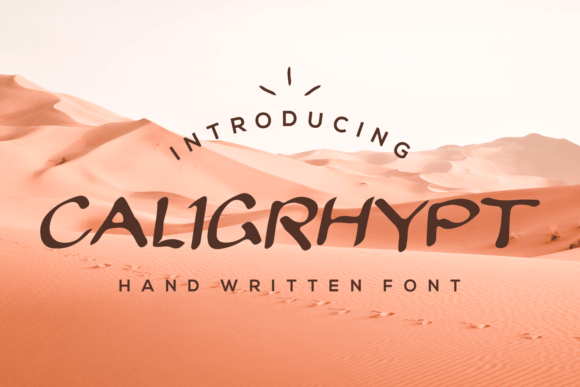
What immediately stands out about Caligrhypt is its balance. The letterforms have a natural, hand-drawn quality with subtle irregularities that give it authenticity. You can see the slight variations in stroke weight and the gentle, organic flow from one character to the next. Yet, it avoids looking messy or childish. The overall structure is consistent, and the spacing is thoughtful, which is crucial for any creative font you intend to use beyond a single headline. It’s a premium font that understands its job: to communicate with personality, not just prettiness. The lowercase letters, in particular, have a friendly, rounded quality, while the uppercase provides a stronger, more defined presence. This duality makes it a flexible display font for various contexts.
Where Caligrhypt Truly Shines
The practical applications for a font like Caligrhypt are broad, but it excels in projects where you want to inject a dose of authenticity and creativity. Think about brand identity for small businesses, especially those in the lifestyle, artisanal, or creative spaces. A bakery, a boutique coffee shop, a handmade cosmetics line, or a local pottery studio could use Caligrhypt for their logo design to immediately convey craftsmanship and a personal touch. It works beautifully for brand names, taglines, and short descriptive text on packaging.
In editorial design, it’s a fantastic tool for creating contrast. Imagine a magazine layout or a blog post where a clean, minimalist sans serif font handles the body text, and Caligrhypt is used for pull quotes, section headers, or article titles. This pairing creates a visual hierarchy that guides the reader's eye and adds a layer of visual interest without overwhelming the page. For web design, using it sparingly for key headlines, calls-to-action, or logo lockups can break the monotony of standard web fonts and make a site feel more bespoke. Just be mindful of readability at smaller sizes on screens.
The world of packaging design is another natural home. On a product label, Caligrhypt can highlight the product name or a key ingredient, making the item feel more handcrafted and special. For social media graphics, it’s a game-changer. Creating Instagram quotes, Pinterest pins, or Facebook announcements with this font can help your content stand out in a crowded feed. The font’s personality helps stop the scroll and makes the message feel more personal and direct. For personal projects like wedding invitations, greeting cards, or custom stationery, it offers a sophisticated alternative to overly formal script fonts.
Working with Caligrhypt: Practical Considerations
Choosing the right font is only half the battle; using it effectively is what makes the design work. The first step is always to evaluate the project's needs. Caligrhypt is a display font, meaning it's designed for impact at larger sizes. It’s not intended for long paragraphs of body copy. Its strength is in headlines, short phrases, and logos. If your project requires extended reading, pair it with a highly legible serif font or sans serif font for the main text.
This leads to the critical practice of font pairing. A good rule of thumb is to contrast style and function. Pair Caligrhypt with a simple, geometric sans serif like Montserrat or a classic serif like Lora. The contrast allows each font to play its role: the sans serif provides stability and readability, while Caligrhypt adds character and draws attention to key elements. Always test your pairings in context. Does the combination feel balanced? Does it enhance the message or distract from it?
Before purchasing or downloading, review what’s included with the font. A quality commercial font like Caligrhypt often comes with multiple styles—perhaps a regular and a bold weight, or stylistic alternates. These extras can be invaluable for creating subtle variations within a single project, adding depth to your design assets. Always check the licensing terms. If you’re using it for client work, merchandise, or a commercial website, you need to ensure the license covers that use. Reputable font foundries make this clear.
Finally, conduct a readability test. View the font at the size you intend to use it. Is it clear and easy to decipher? Does it maintain its charm when scaled down for a business card or scaled up for a poster? The best modern typography finds that balance between aesthetic appeal and functional clarity. Caligrhypt, with its thoughtful design, generally performs well, but your specific application and audience are what matter most. By considering these practical steps, you can leverage this handwritten font to create designs that are not only beautiful but also effective and engaging.